
Finalist for the 2026 Lambda Literary Award in Lesbian Poetry
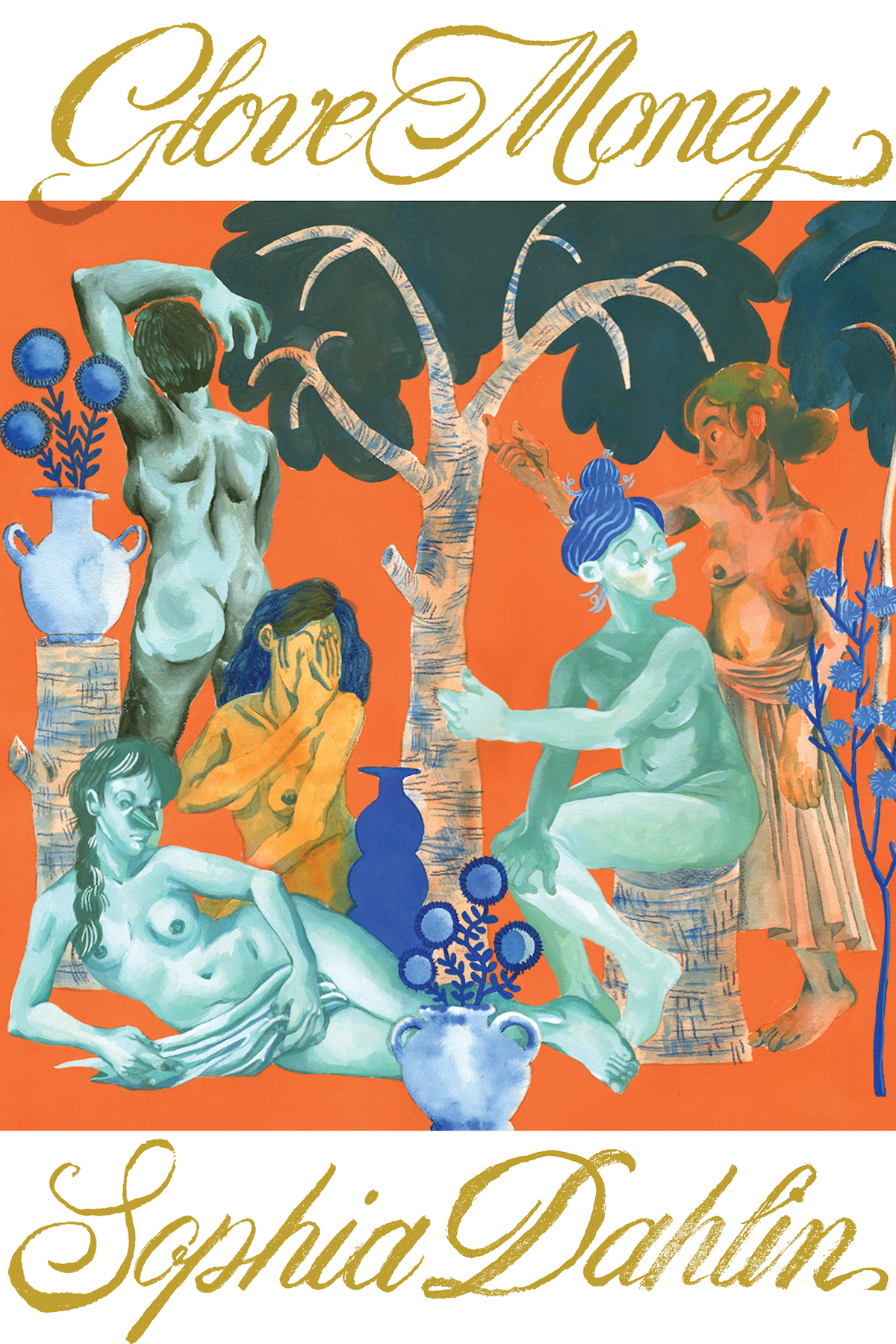
Glove Money
A hymn to perversity, a lyric pledge to desire and risk, Glove Money pages through the canon to “seed its sugar in your dreams.”
Poetry
Price range: $12.99 through $18.95
In this joyful and irreverent exploration of the role of poet-as lover, Sophia Dahlin plays Sappho, O’Hara, romantics and troubadours, assembling a self seaworthy of romance. With humor and a light touch, Glove Money dismisses bioessentialist gatekeeping and expands the lesbian imaginary.
Praise
Sophia Dahlin’s language and sweetly metered pacing perfectly anticipates my feelings, surprising me with how much earnestness I have preserved.
Show More +Show Less -
Details
ISBN: 9781643622927
Paperback, 96 pages, 5.83 x 8.82 in
Publication Date: October 14, 2025
Reviews
Dahlin has a genius for voice… Dahlin’s speakers are ‘overheard’ in the way a stage whisper is “overheard,” or in the way of that certain brand of flirtation where one says something to a person beside the love object, hoping the beloved will know you’re speaking to or about them.
Show More +Show Less -

You may also like:
-
 Intergenre, Essay
Acker
$17.95 Add to cart -
 Poetry
The Pink Trance Notebooks
$17.95 Add to cart -
 Poetry
Camp Marmalade
$18.95 Add to cart -
 Poetry
Some Animal
Price range: $12.99 through $16.95 Select options This product has multiple variants. The options may be chosen on the product page