
Close

News

Nightboat is overjoyed to share that we’re reissuing Leslie Feinberg’s classic of revolutionary queer literature, Stone Butch Blues, in paperback, ebook, and audiobook formats in Fall 2027! Leslie Feinberg’s novel, first published by Firebrand Books in 1993 and long out of print, is a groundbreaking semi-autobiographical narrative of transgender experience that follows its narrator, Jess Goldberg, as she navigates coming out as butch in the bars and factories of the pre-feminist '60s and then passing as a man in order to survive when left without work or a community in the early '70s. As Feinberg said, “[With] this novel I…

Read More

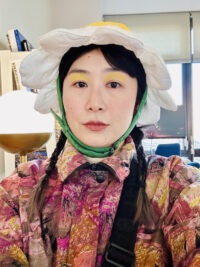
imogen smith's evanescent second collection raw & zero enters the world "in an epoch of pandemic, genocide, mass war, poverty, corruption, & environmental destruction," yet “in the center there is / hope," steamy, sexy blossoms of hope. smith's prosodic virtuosity and visual poetics bring the reader into her world of herbalist gardens, political organizing, and protest, without letting you forget "How would i love you if i didn’t love your pleasures?” —Lina Bergamini & Stephen Motika Lina Bergamini & Stephen Motika: You say, “raw & zero entered the world in an epoch of pandemic, genocide, mass war, poverty, corruption, & environmental destruction.” How do you…

Read More

In Perennial Counterpart, Yongyu Chen’s debut poetry collection, reading, like friendship, is “a way of life.” With an elliptical, contemplative voice and a scholar’s critical disposition, Chen attends to all things that both connect and separate: tunnels, membranes, clothing, screens, pages in a book, a blank space between words. Poems act as intimate explorations of the ever-shifting nature of relation itself, with “being-together-alone” emerging as a sublime mode of connection. Here, we discuss difficulty & reversibility, influences & non-influences, and “the lettery feeling of friendship.” —Lucia Kan-Sperling Lucia Kan-Sperling: The poems in Perennial Counterpart meander through time—dated between 2021 and 2025—and…

Read More

Soham Patel's The Daughter Industry is at once an imagined performance, hauntological confession, and polyvocal chorus. The cast of "players" includes Sasmita ("limber, gender-fluid, jesterlike"), Sajani (a "venerated femme mother"), and Sarah ("likely a heavenly Pisces"), all living, breathing, and bickering in the interstices of language and culture. Their conversations and soliloquies span wedding markets, yoga studios, and ultrasound rooms, collapsing all of those into a charged, often surreal meditation on how gender is produced, performed, and policed. "The daughter is at once at risk and always arriving," Patel reflects in our conversation below. We also discuss the collection's many…

Read More

The following is excerpted from Anne Boyer's introduction to Olivia Tapiero's Nothing at All, translated from the French by Kit Schluter. Translated with a fierce precision by Kit Schluter, Olivia Tapiero’s Nothing at All is an…

Read More

We’ll be in Baltimore for the 2026 AWP Conference. Please join us at our offsite and conference events and visit our booth #1068 to get your book signed! All offsite events are free and open to the public. *** Join Nightboat in celebrating our authors during AWP at Red Emma’s Bookstore Coffeehouse in Baltimore! Thursday, March 5th, 8pm to 10pm Red Emma’s Bookstore 3128 Greenmount Ave, Baltimore, MD 21218 Readings by: Aditi Machado Antonio Ochoa Aurora Mattia Azad Sharma Brian Teare Chia-Lun Chang Dior J. Stephens Emily Lee Luan imogen smith Kimberly Alidio Mónica de la Torre Miranda Mellis Noa Fields Soham Patel Tisa Bryant Valerie Hsiung Wo Chan Yongyu Chen *** Join Nightboat in celebrating our authors during AWP Friday, March 6, 1:450-3:00pm Baltimore Convention Center Level…

Read More

In E, Noa Micaela Fields takes on Louis Zukofsky’s monumental long poem “A,” placing it in the register of the trans-autobiographical. Working in, and against, the tradition of homophonic translation, Fields transposes Zukosky as heard through her hearing aids, amidst the soundscape of trans nightlife—like a hijacked, hormone-induced game of  “Telephone.”  Here, we discuss mishearing as radical methodology, and the "unruliness of straying towards other, unheard sonic alternatives." —Dante Silva Dante Silva: How did you come to Louis Zukofsky’s “A”? How did “A” become E? Noa Micaela Fields: I found a beat up copy of Zukofsky’s objectivist long poem “A” in a local…

Read More